
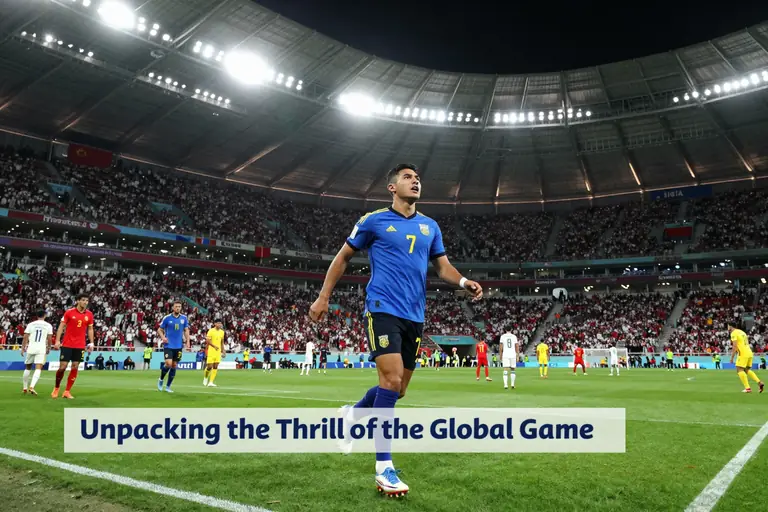
The Unparalleled Excitement of Soccer World Cup Match Reports
There’s nothing quite like the FIFA World Cup. Every four years, the world stops to watch as nations battle it out for football’s ultimate prize. And at the heart of this global spectacle are the Soccer World Cup Latest News and detailed analyses that capture every moment of the action. These aren’t just summaries; they’re narratives that bring the games to life, allowing fans to relive the drama and dissect the strategies long after the final whistle. The sheer scale of the tournament, spanning over a month and featuring teams from every continent, means that each match report contributes to a vast, unfolding saga of sporting ambition and national pride.
From the opening ceremony, often a spectacle in itself, to the nail-biting final that crowns the world champions, each match contributes to a larger, intricate story. And it’s through comprehensive Soccer World Cup Match Reports that these individual stories are woven together, painting a vivid picture of the tournament’s progression. We’re talking about more than just scores; we’re delving into intricate player performances, tactical masterstrokes by seasoned coaches, controversial decisions that ignite global debates, and the sheer emotional rollercoaster experienced by players, coaching staff, and millions of fans alike. These reports serve as the enduring chronicles of football history, preserving the moments that captivate and define generations of supporters.
What Makes a Great Soccer World Cup Match Report?
A truly compelling Soccer World Cup Match Report goes beyond the basic facts. It offers insight, context, and a touch of evocative storytelling that transports the reader directly into the stadium. It’s about capturing the essence of the game, the ebb and flow of momentum, and the human drama unfolding on the pitch. Here are some key elements that elevate a standard report into a memorable piece of sports journalism:
- Detailed Play-by-Play: This isn’t merely stating who scored, but meticulously describing how the goal developed. Was it a brilliant individual effort, weaving through defenders with dazzling skill? A perfectly executed team move, involving intricate passing and intelligent off-the-ball runs? Or perhaps a stroke of luck, a deflection, or a goalkeeping error? The narrative should paint a clear picture of the sequence of events.
- Tactical Analysis: A crucial component for understanding the ‘why’ behind the ‘what’. How did each team set up their formation (e.g., 4-3-3, 3-5-2)? Were there any surprising personnel changes or strategic tweaks from previous games? How did these tactics evolve throughout the game, especially after substitutions, red cards, or a change in the scoreline? This includes analyzing pressing schemes, defensive blocks, and attacking patterns.
- Player Ratings and Performances: Highlighting standout performers, the ‘man of the match’, and unsung heroes whose contributions might not appear on the scoresheet but were vital to the team’s success. Conversely, it also involves identifying players who perhaps didn’t live up to expectations, explaining the impact (or lack thereof) of key players on the overall outcome. This often includes subjective ratings but should be backed by observational evidence.
- Key Moments and Turning Points: Every match, particularly in a high-stakes tournament like the World Cup, has moments that decisively swing the momentum. A crucial save that prevents a certain goal, a missed penalty that deflates one team and energizes the other, a contentious referee decision that changes the complexion of the game – these are the incidents that often define a match’s narrative and deserve thorough examination.
- Post-Match Reactions: Quotes directly from managers and players offer invaluable insights into their perspectives on the game, their immediate emotions, their analysis of what went right or wrong, and their plans or hopes for future matches. These quotes add a human element and often reveal underlying tensions or philosophies.
- Statistical Breakdown: Beyond the score, objective data provides a deeper understanding. This includes possession percentages, shots on target, total shots, fouls committed, corners won, passing accuracy, distance covered by players, and even advanced metrics like expected goals (xG). These numbers provide an objective look at the game’s flow and the effectiveness of each team’s approach, allowing for data-driven conclusions.
These elements combine to create a rich tapestry of information, making each Soccer World Cup Match Report a valuable resource for fans, analysts, and even coaches. They serve as historical records, capturing the essence of each encounter and contributing to the collective memory of the tournament.
The Evolution of Soccer World Cup Match Reports
In the early days of the World Cup, match reports were often brief telegrams or newspaper columns, limited by basic technology and finite physical space. Journalists relied heavily on their observational skills and memory, with reports often appearing a day or two after the match. Today, with instant access to information, global communication networks, and advanced analytics, Soccer World Cup Match Reports have become incredibly sophisticated and immediate. They can include interactive graphics, heat maps showing player movement, expected goals (xG) statistics to assess shot quality, and detailed breakdowns of individual player actions. This technological evolution has allowed for a much deeper and more nuanced understanding of the game, moving beyond anecdotal observations to data-driven, scientific analysis.
The rise of digital media has also profoundly transformed how we consume these reports. No longer do we have to wait for the morning paper or a weekly sports magazine. Live blogs provide minute-by-minute updates, instant post-match reports are published within minutes of the final whistle, and comprehensive video analysis is available almost immediately. This immediacy adds another layer of excitement and engagement, allowing fans to process and discuss the game’s events in real-time, often across global platforms and social media. This constant flow of information creates an ongoing conversation around each match.
Reliving Classic Encounters Through Soccer World Cup Match Reports
Think back to some of the most iconic World Cup matches: Brazil’s artistry in 1970, Italy’s resilient triumph in 1982, Maradona’s individual genius in 1986, France’s home glory in 1998, or Germany’s dominant masterclass in 2014. Each of these legendary games, and countless others, is preserved and celebrated through its accompanying Soccer World Cup Match Report. These reports allow us to revisit the tactical battles, marvel at the individual brilliance of players, and re-experience the sheer drama that unfolded on the pitch. They are a testament to the enduring power of football and the unforgettable stories it creates, transcending generations.
For instance, a Soccer World Cup Match Report from the infamous 1986 quarter-final between Argentina and England wouldn’t just state the final score. It would meticulously describe Maradona’s controversial “Hand of God” goal, the immediate uproar and debate surrounding it, and then, in stark contrast, his breathtaking solo effort that followed – often considered one of the greatest goals of all time. Such reports provide the essential narrative context, detailing the build-up, the emotional impact, and the lingering legacy that makes these moments indelible in football history. They allow new generations of fans to understand the significance of these historical events, not just as results, but as pivotal moments shaped by human action, skill, and sometimes, controversy.
The Impact on Fans and Analysts
For fans, Soccer World Cup Match Reports are an essential and often eagerly anticipated part of the World Cup experience. They fuel discussions, settle passionate debates among friends and online communities, and deepen appreciation for the intricate nuances of the sport. They allow supporters to understand not just whether their team won or lost, but why, delving into the tactical decisions, individual performances, and critical moments that shaped the outcome. For those who couldn’t watch a game live due to time differences or other commitments, a detailed Soccer World Cup Match Report is often the next best thing, offering a vivid and comprehensive recreation of the action, sometimes even more detailed than what could be absorbed in real-time.
For professional analysts, journalists, commentators, and even opposing coaches, these reports are the backbone of their work. They provide the raw material for deeper investigations, trend spotting in player development or tactical innovation, and forecasting future performances of teams and individuals. The wealth of data, observations, and narratives contained within each Soccer World Cup Match Report contributes significantly to the broader understanding of national team football, the evolution of playing styles, and the global landscape of player talent and development. They are crucial for identifying emerging stars, analyzing coaching philosophies, and preparing for future encounters.
Behind the Scenes: Crafting the Perfect Soccer World Cup Match Report
Writing a compelling Soccer World Cup Match Report is an art form, demanding a unique blend of journalistic rigor and deep football knowledge. It requires not only a profound understanding of the game’s rules and tactics but also keen observational skills, a sharp analytical mind, and the ability to articulate complex events clearly, concisely, and engagingly. Reporters often work under immense pressure, with incredibly tight deadlines immediately following the final whistle, and the need to capture the intensity and key narratives of the moment. They must balance objective reporting of facts with insightful commentary and critical judgment, ensuring the report is both informative and enjoyable to read, satisfying both the casual fan and the tactical aficionado.
Consider the immense challenge of covering a high-stakes knockout game, where every pass, every tackle, every decision by the referee or assistant referee can be magnified and scrutinized. The writer of a Soccer World Cup Match Report must identify these critical junctures, understand their immediate and long-term significance, and explain their impact within the broader context of the game. It’s about more than just recounting a sequence of events; it’s about interpreting and explaining the ‘why’ behind the ‘what’, providing context to the chaos and clarity to the complexity. This requires not only being present at the match but often re-watching key moments, consulting statistics, and gathering expert opinions to form a comprehensive and authoritative account.
Looking Ahead: The Future of Soccer World Cup Match Reports
As technology continues to advance at an unprecedented pace, so too will the sophistication and accessibility of Soccer World Cup Match Reports. We can expect even more immersive and personalized experiences in the future, perhaps incorporating virtual reality elements that place the reader virtually on the sidelines, or personalized data streams that allow fans to customize the statistics they wish to delve into. The integration of artificial intelligence (AI) might help in identifying intricate patterns and anomalies that human eyes might miss, offering predictive analysis or even generating initial drafts of reports based on real-time data, adding another layer of analytical depth and efficiency. However, the human element – the storytelling, the emotional connection, the critical judgment, and the unique voice of a skilled journalist – will always remain paramount, as it is this human touch that truly brings the game to life beyond mere data points.
The essence of a great Soccer World Cup Match Report will always be its ability to transport the reader back to the pitch, allowing them to feel the tension, the exhilaration of joy, and the profound heartbreak of the game. It’s about capturing the intangible magic that makes the World Cup the most watched and beloved sporting event on the planet. Whether it’s a historic upset that defies all odds, an individual moment of breathtaking brilliance, or a dominant team performance that rewrites tactical manuals, each and every Soccer World Cup Match Report contributes significantly to the rich, ongoing tapestry of football history, ensuring that these moments are never forgotten.
Ultimately, Soccer World Cup Match Reports are more than just articles; they are meticulously crafted chronicles of sporting glory, tactical ingenuity, profound human emotion, and national narratives. They are indispensable resources for anyone who wants to truly understand and appreciate the beautiful game at its absolute highest level. They ensure that the legacy of each tournament, the indelible mark of each team, and the unforgettable contributions of each player live on, etched into the collective memory, long after the final whistle blows and the crowds disperse.
FAQ
Q1: Where can I find reliable Soccer World Cup Match Reports?
You can find reliable Soccer World Cup Match Reports on major international sports news websites (e.g., FIFA’s official site, BBC Sport, ESPN, The Guardian, Reuters Sports), reputable football-specific blogs and news outlets, and in established national newspapers. Many platforms also offer detailed post-match statistics and video highlights alongside their written reports.
Q2: What kind of information is typically included in a Soccer World Cup Match Report?
A typical Soccer World Cup Match Report is comprehensive, including details on goals scored, key player performances (often with ratings), tactical breakdowns and formations, important incidents (like red cards, controversial referee decisions, or pivotal substitutions), quotes from managers and players, and various match statistics such as possession percentages, shots on target, fouls committed, corners, and passing accuracy. Some advanced reports also feature expected goals (xG) data and heat maps.
Q3: How do Soccer World Cup Match Reports help fans understand the game better?
Soccer World Cup Match Reports significantly enhance a fan’s understanding by providing context and in-depth analysis beyond just the final score. They explain the strategic decisions made by coaches, highlight crucial moments that shifted momentum, and offer insights into why certain outcomes occurred. By breaking down the tactical battle, individual player contributions, and the emotional arc of the game, these reports deepen a fan’s appreciation for the complexities and nuances of football, allowing them to engage with the sport on a more intellectual and emotional level.